

One culture that stands out as unique in tradition when it comes to celebrating St. Valentine’s Day is the Japanese culture.
“Nihon no barentain-dee wa sukoshi kawatte imasu.”
“Valentine’s Day in Japan is a little different.”
It is only women who give presents (mainly chocolates) to men on this holiday. Some girls used to give their first Valentine’s chocolate to a boy as early as the Third Grade. Nowadays, chocolate giving occurs even in kindergarten. Men in Japan give gifts to women on a holiday called White Day, which is on March 14th.
The tradition of women giving chocolates to men on Valentine’s Day began as a marketing tool for chocolate companies in Japan… what a surprise. Women are encouraged to give chocolates and other gifts on this day throughout Japan.
More than half of the chocolate sold in a year in Japan is sold mainly around Valentine’s Day. Women buy them for their co-workers, bosses, male friends, brother(s), father, husband, boyfriend(s), and so forth.
Chocolates given to men whom the women do not feel any particular love or affection for are called “giri-choco” (“Obligation chocolate”).
One thing I have always loved about traveling — and especially about living abroad — is noticing the subtle cultural differences that most guidebooks never really explain.
Valentine’s Day in Japan is one of those experiences.
At first glance, it may seem familiar enough: department stores overflowing with chocolates, romantic displays filling shop windows, and cafés offering limited seasonal menus in shades of pink and red. But beneath the surface, the traditions surrounding Valentine’s Day in Japan are surprisingly layered, thoughtful, and uniquely structured compared to what many of us in the West are used to.
Unlike in North America or much of Europe, where Valentine’s Day tends to be a more mutual exchange between couples, Japan traditionally places the gift-giving responsibility on women. On February 14th, women often give chocolates to men — but not always in a romantic sense.
There are actually different “categories” of chocolates.
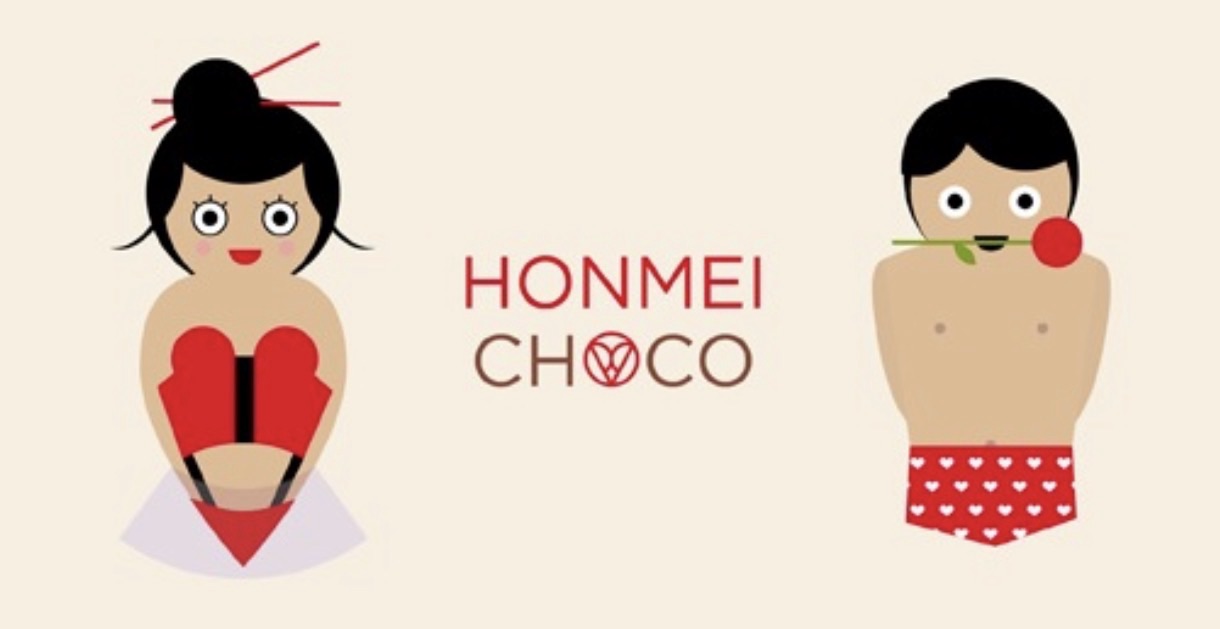
Honmei-choco (“true feeling chocolate”) is reserved for romantic partners or someone a woman genuinely has feelings for. These gifts are often more personal, thoughtful, and sometimes handmade.

Then there is giri-choco, or “obligation chocolate,” which is commonly given to male coworkers, bosses, classmates, or friends as a gesture of appreciation and social courtesy rather than romance. In recent years, other variations have appeared as well — including tomo-choco (“friend chocolate”) exchanged between female friends, and even jibun-choco, chocolates women buy for themselves simply because they deserve something good too.
And honestly? I fully support that last category.
What makes the Japanese tradition especially interesting is that the men are expected to reciprocate exactly one month later on March 14th — known as White Day. Traditionally, men return gifts, often with chocolates, sweets, or small presents, creating a sort of two-part cultural exchange around affection, gratitude, and social connection.
When I first experienced Valentine’s season in Japan, I remember being fascinated less by the holiday itself and more by how much social etiquette and quiet emotional nuance was woven into it. Japan often expresses emotion differently than the West — sometimes less loudly, but not less deeply.
There is something very Japanese about communicating affection through small details:
- beautiful packaging,
- carefully selected sweets,
- a thoughtfully timed gesture,
- or even simply the effort behind something handmade.
It reminded me that love and appreciation are not always expressed in the same language across cultures. Sometimes they are subtle. Sometimes ritualized. Sometimes hidden behind politeness and routine. But they are there all the same.
Experiences like this are part of why I’ve always believed travel becomes far more meaningful when you pay attention to everyday cultural moments — not just the famous landmarks. Sometimes the most memorable insights come from seasonal traditions, conversations in shops, or observing how another society quietly approaches connection, generosity, and care.
And yes… the chocolate selection in Japan during February is absolutely worth experiencing for yourself.
If you want to make your own heart-shaped chocolates or green tea chocolate cakes for your loved one(s), visit:
Green Tea Chocoloate Cake:
http://japanesefood.about.com/od/japanesecake/r/greenteacake.htm
Heart-Shaped Chocolates:
http://japanesefood.about.com/od/japanesedessertsweet/r/heartchocolate.htm

ハッピーバレンタインデー
BUON SAN VALENTINO!
HAPPY ST. VALENTINE’S DAY!
For More Information:
http://japanesefood.about.com/cs/holidays/a/valentinechoco.htm


