
Some experiences stay with us long after we’ve forgotten the details.
Not because we remember every attraction, every ticket stub, or every photograph, but because they leave behind a feeling.
For me, Luna Luna was one of those experiences.
As a child traveling through Europe with my mother in the 1980s, I remember stepping into a world that felt unlike anything I had ever seen before. Art wasn’t hanging quietly on gallery walls. It was alive. Playful. Surreal. A fantastical fairground where imagination seemed to have been given permission to run completely free.
Over the years, that memory settled somewhere in the back of my mind.
Then, decades later, it unexpectedly returned.
I was in Los Angeles on an urgent last-minute work trip when I happened to see an advertisement announcing the opening day of Luna Luna: Forgotten Fantasy. The timing felt almost impossible. The exhibition was opening that very day.
Within minutes, I had purchased a ticket.
Gladly, some opportunities have a way of finding you exactly when they’re supposed to.
The taxi couldn’t reach the entrance directly due to road closures and dropped me a couple blocks away. Fortunately, the walk was short—just a few minutes—but it felt strangely fitting. Almost like approaching a hidden world tucked away from the city around it.
The entrance opened into a small outdoor garden dotted with sculptures, picnic tables, and a kiosk bar where visitors lingered before entering.
Then came the first surprise.
Rather than immediately stepping into the exhibition itself, visitors were guided into a darkened room where a short film explained the remarkable history of Luna Luna.
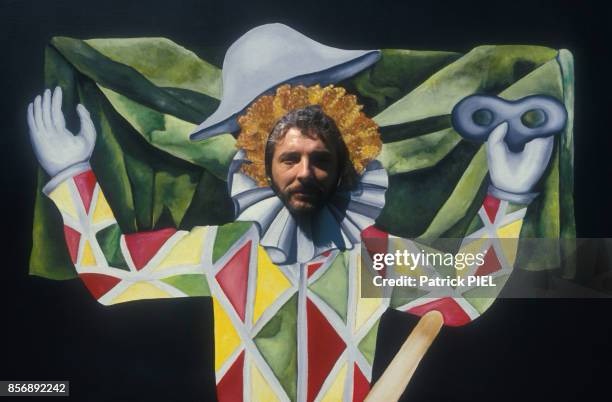
Originally conceived by Austrian artist André Heller, Luna Luna debuted in Hamburg in 1987 as the world’s first art amusement park. More than thirty celebrated artists contributed attractions, including Salvador Dalí, Jean-Michel Basquiat, Keith Haring, Roy Lichtenstein, David Hockney, and others. Following its initial run, the project disappeared into storage containers for decades before eventually being rediscovered and restored for a new generation. (Wikipedia)
The story alone felt almost too fantastical to be true.
And then the curtains opened.
Literally.
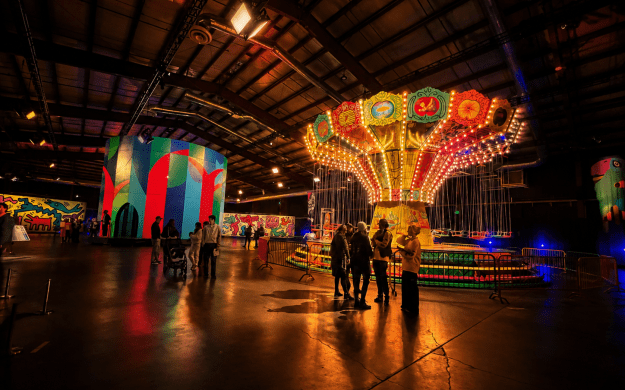
Massive black curtains parted, and suddenly I found myself standing inside an enormous exhibition hall.
The scale was breathtaking.
All around me stood the surviving pieces of a forgotten artistic dream:
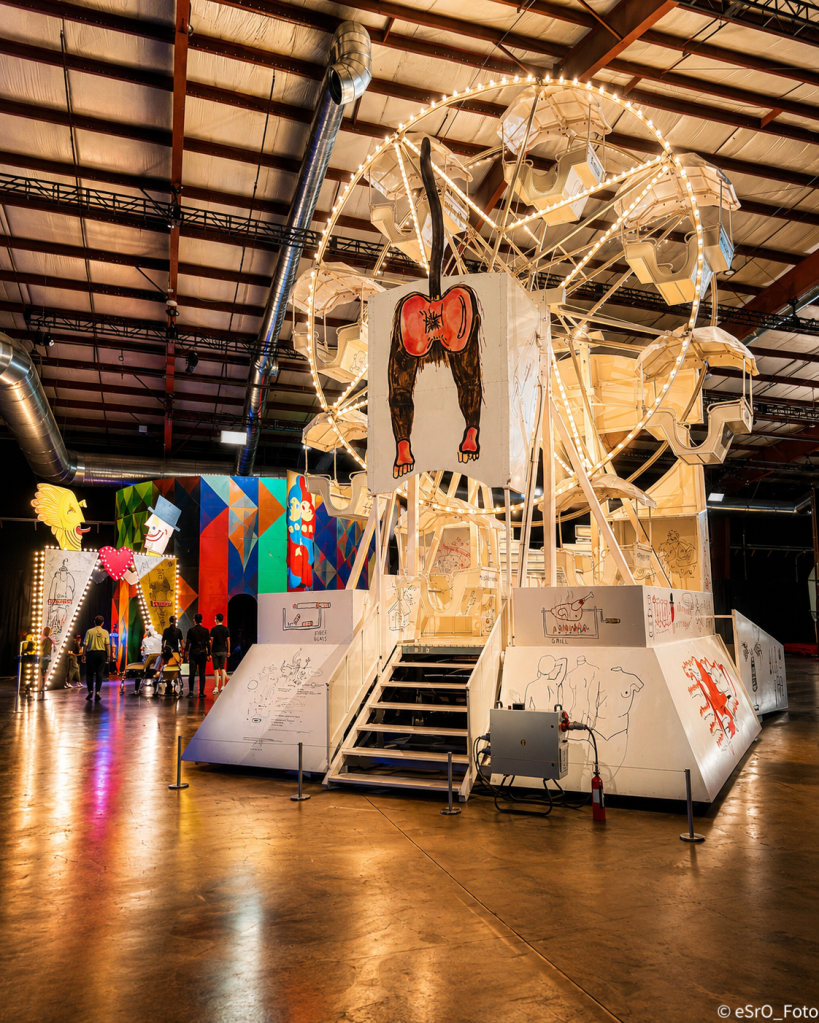
– Basquiat’s Ferris wheel.
– Keith Haring’s carousel.
– Roy Lichtenstein’s geometric pavilion.
– Dalí’s mesmerizing mirrored Dalídom.
…and so much more!
While modern safety requirements mean visitors can no longer ride the attractions, seeing them in person remains extraordinary. These aren’t replicas or interpretations. They are the original creations themselves—artworks that somehow survived decades in storage before being brought back into the light. (Wikipedia)
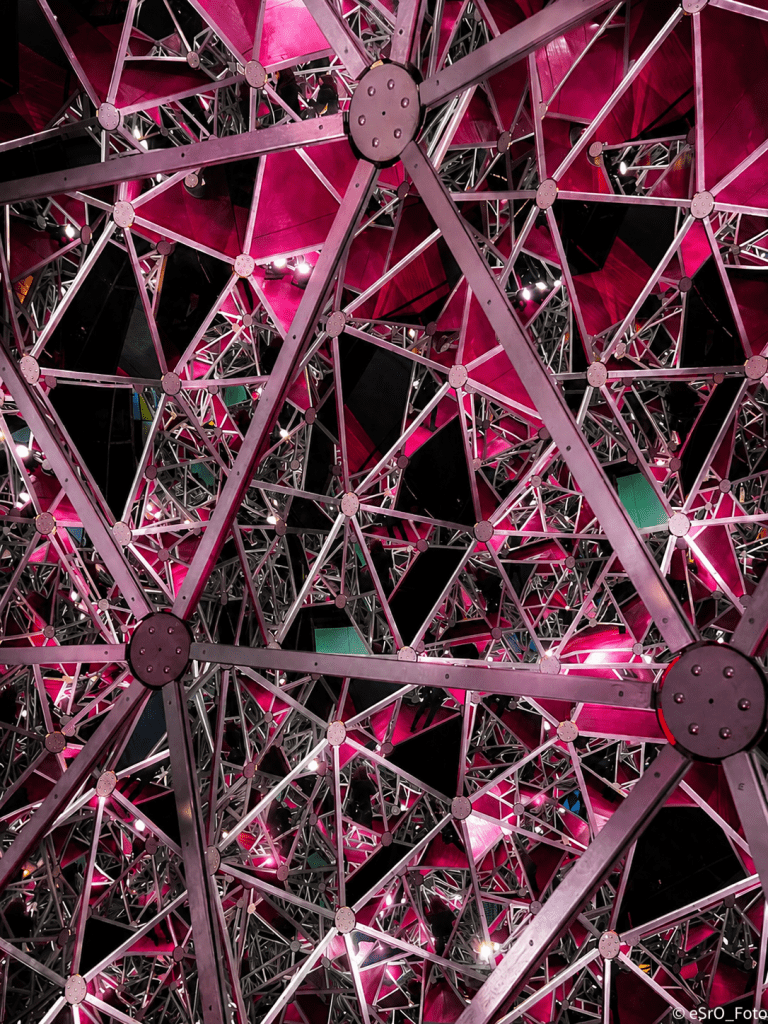
Of everything I experienced that afternoon, Dalí’s mirrored pavilion, Dalídom, may have been my favorite.
Stepping inside felt magical, as reflections multiplied endlessly around you. It was impossible to tell where reality ended and illusion began.
Elsewhere, visitors gathered around another unexpected attraction: ANDRÉ HELLER Dream Station and Wedding Chapel.
Every few minutes, a new ceremony would begin.
You could marry your partner, your best friend, or even a complete stranger.
The entire concept felt delightfully absurd in exactly the way Luna Luna was intended to be.
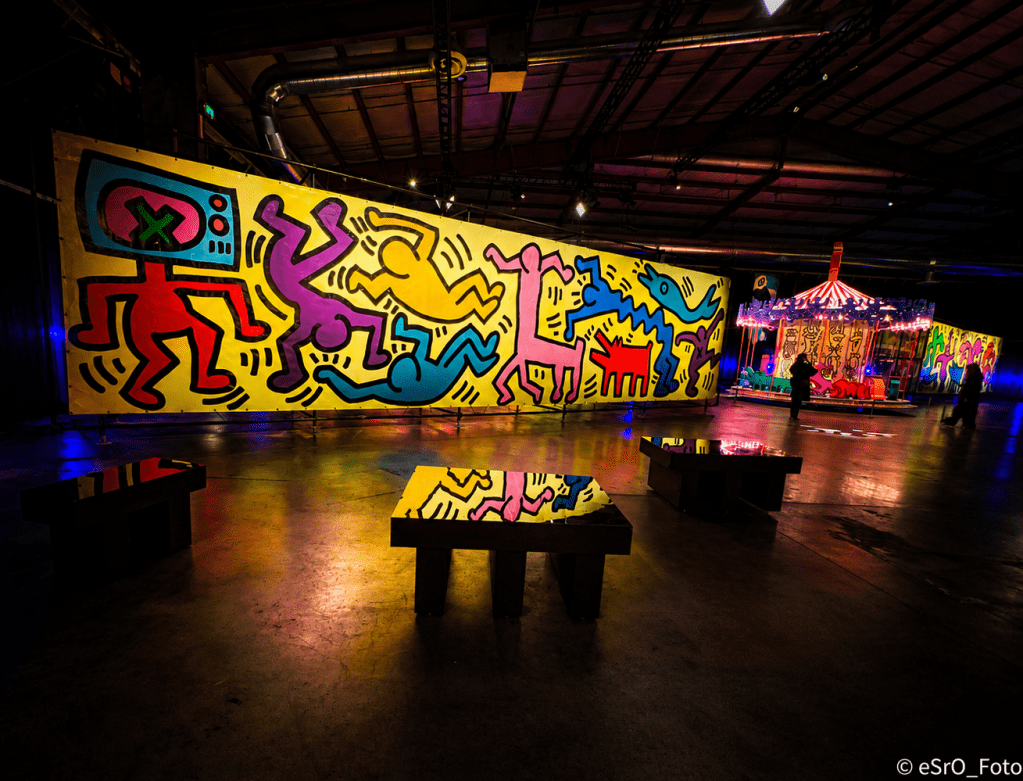
On the other end of the exhibition hall, Keith Haring’s vibrant murals wrapped around visitors as they wandered through the installation. Benches invited people to sit, linger, and absorb the artwork rather than rush through it. In a world increasingly obsessed with speed, that simple invitation to pause felt refreshing.
What struck me most wasn’t the nostalgia.
It was how contemporary the entire experience still felt.
Despite originating nearly four decades ago, Luna Luna remains remarkably relevant. It blurs the line between art, entertainment, performance, and participation in a way that many modern immersive experiences still struggle to achieve.
And then there was the gift shop…
I should probably admit that I exercised very little self-control.
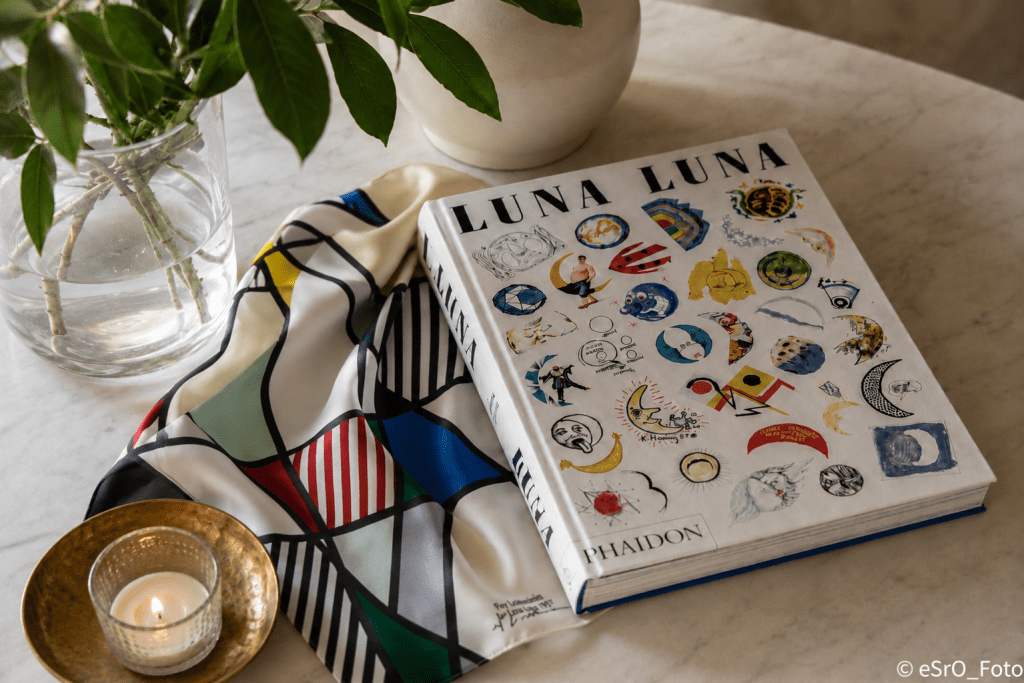
The oversized coffee table book quickly found its way into my hands, followed by a collection of silk scarves inspired by the participating artists, and a few pins.
I regret absolutely nothing.
As I left that afternoon and stepped back into Los Angeles, I realized something unexpected had happened.
What began as a brief diversion from work had become something far more meaningful.
For a few hours, the noise of deadlines, meetings, and responsibilities disappeared.
In its place was wonder.
The same wonder I vaguely remembered feeling decades earlier while walking beside my mother through the original park.
Travel often introduces us to new places.
Occasionally, however, it reconnects us with forgotten parts of ourselves.
Luna Luna did exactly that.
And for that reason alone, it was worth the ticket.
1601 E. 6th St.
Los Angeles, CA 90023 – USA
(In the Arts District / Boyle Heights area)
Current Status: The Los Angeles exhibition is temporarily closed, with plans for a multi-year reopening starting January 1, 2028. However, you can keep up-to-date for the next opening on the Luna Luna website or Instagram page and, of course, you may always shop on their website in the meantime.


