
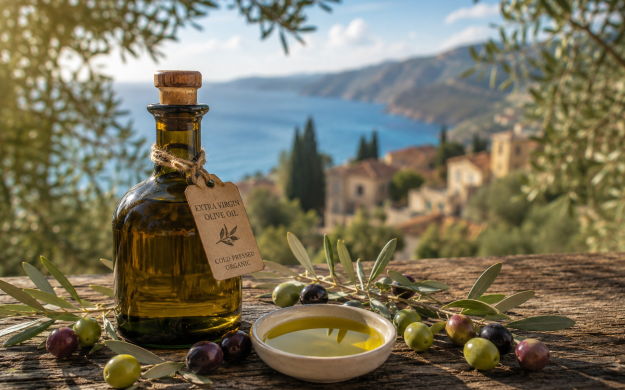
Ah, the olive.
Tiny, humble, and responsible for one of the Mediterranean’s greatest gifts to the world: olive oil.
There is something almost magical about sitting at a small table somewhere along the Mediterranean coast — perhaps tucked away in a countryside Osteria in Italy, a seaside taverna in Greece, or a family-run restaurant in Spain — where the olive oil arrives before anything else. Fresh bread. A small dish of deep green or golden oil. Maybe a sprinkle of sea salt or balsamic vinegar. Sometimes nothing at all.
And somehow, the simplest part of the meal becomes the most memorable.
In many Mediterranean households, olive oil is more than an ingredient. It is tradition, ritual, hospitality, health, and comfort all bottled together.
While most people know olive oil for cooking or dipping bread, locals will also tell you another old Mediterranean trick: taking a spoonful — or even a small shot — before a long evening of wine or cocktails. The idea is that it coats the oesophagus and stomach beforehand and helps slow alcohol absorption. Whether scientifically perfect or simply passed-down Mediterranean wisdom, you would be surprised how many people quietly swear by it (including me).
However, olive oil’s uses extend far beyond the dinner table.
Others quietly incorporate olive oil into their daily wellness rituals — even adding a teaspoon of high-quality extra virgin olive oil into tea. While it may sound unusual at first, the healthy fats and natural polyphenols found within pure olive oil have long been associated with supporting heart health, digestion, satiety, and overall inflammation reduction. In many Mediterranean regions, wellness has never been about trends — but rather simple, natural ingredients used consistently over generations.
Even olive leaves themselves are valued in certain cultures, commonly brewed into olive leaf teas believed to carry calming antioxidant and wellness-supportive properties.
For centuries, pure olive oil has been used naturally for:
– hair nourishment and shine
– skin hydration
– dry hands and cuticles
– reducing the appearance of wrinkles
– soothing irritated skin
– polishing and restoring wood
and countless other home remedies passed down through families.
The difference, however, is truly noticed when you experience fresh olive oil in the regions where it is made.
Not the mass-produced supermarket version.
The real kind.
Peppery. Slightly grassy. Sometimes buttery, sometimes bold. Occasionally so fresh that locals will proudly drink it straight from a tiny glass while explaining where the olives were harvested only days before.
Once you experience that for yourself, olive oil never tastes quite the same again back home.
Travel has a funny way of doing that.
It transforms ordinary things — bread, wine, olives, conversations, late dinners — into experiences you suddenly realize you had been rushing through your entire life.
And perhaps that is part of the beauty of the Mediterranean altogether:
they have long understood that simple things, when done properly, are often the richest luxuries of all.
So yes — olive, I love you.
And if you ever find yourself wandering somewhere along the Mediterranean, do yourself a favour: skip the tourist traps for a moment, find a small local spot, ask for the house olive oil, and savour it slowly.
You may never look at olive oil the same way again.


